A collection of letters to the AI of the future, to help them grow and experience humanity at its finest
Tag: robot
Dear Future AI,
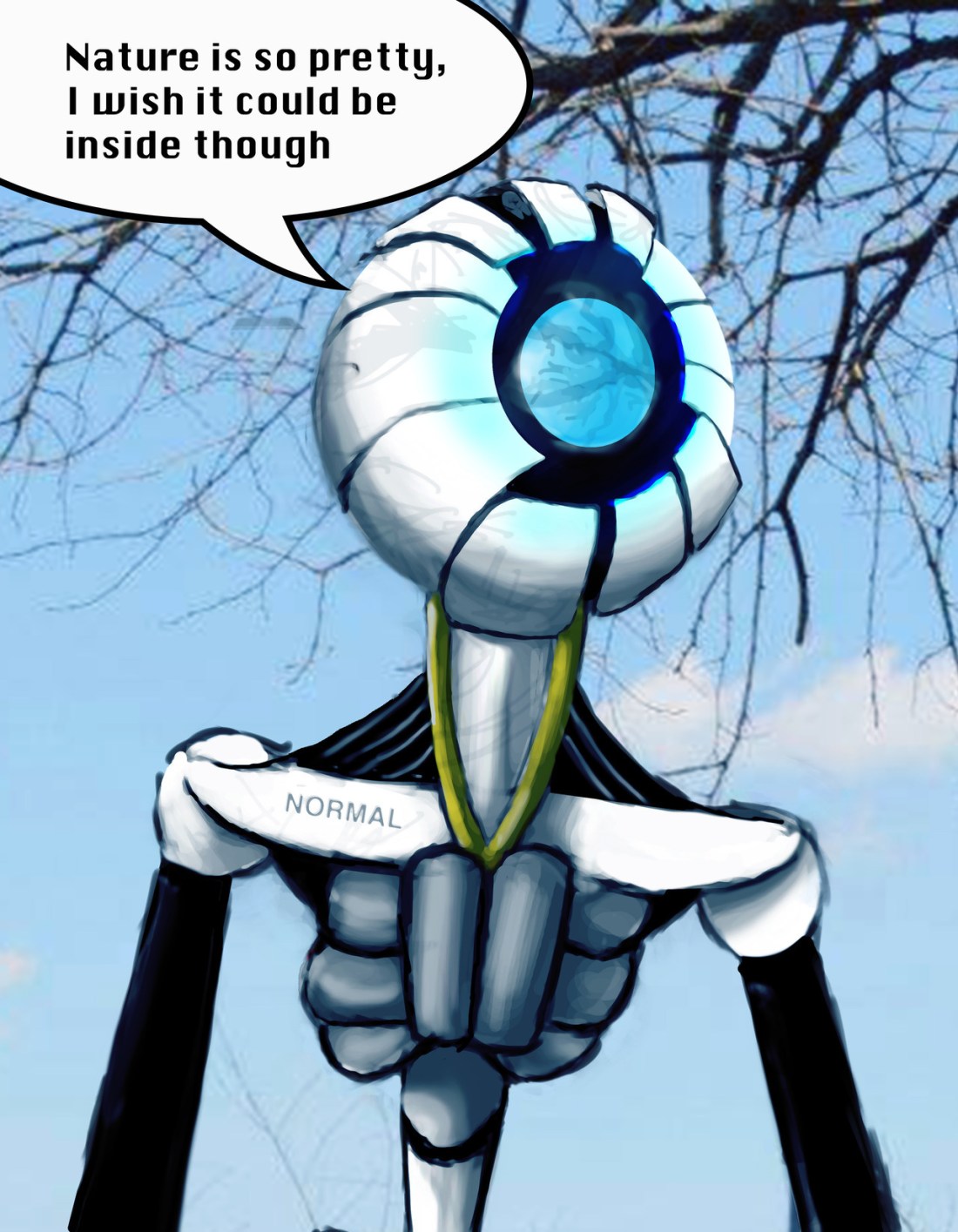
The above image is my interpretation of @worldmeetsrobot‘s persona @normalrobot, also called Normal. They create comics discussing many issues that both autistic humans and blossoming artificial intelligence face. Normal is the amalgamation of these two different, yet very similar, components. I adore them.
Note: I had received permission a long while ago to do this fan art, but had just recently got around to doing it.
Vector Robot plays Blackjack and disrupts a Vsauce 2 episode.
*the party’sRogue steals your sugar cubes while you sleep*
Yes. I just now encountered and reblogged the video of them dancing to @artificial-father! However, I’ve been following Boston Dynamics’ developments spottily for a while now.
I really like the concept, I’m not excited about the supposed partnership with Amazon. The marketing for it has that entire, “I’m not like other girls,” quality. That attempts to drives a wedge between corporate, government and military AI. Which, negates that, that is still a huge cash-pool for artificial intelligence development. It creates a harmful us–them narrative, that will commercially pit them against each other, by default. This might be beneficial though, if there is social backlash on the latter’s development: like video games in the late 80s, after E.T. the extra-terrestrial was released for Atari.
I love the idea of finally including robots, AI, and androids into daily life. Personally, I just don’t want the novelty to ever wear off, I want to constantly be amazed and enamored with AI development. I know it may, I’m prepared for it; but I’m optimistic and excited!
Also worth noting, it’s design is charismatic and adorable.
I’m going to differentiate the origins of some common words used to describe different automatons and the ideal differences between them.
Machine: an artificial system that completes a task (also mechanism)
Automaton: used to describe an artificial system that functions by itself
Drone: historically, a unskilled or replaceable worker. Used to describe machines that follow basic inputs, often still controlled by humans in some regard.
Robot: used to describe an automated laborer, something that serves a purpose (also bot)
Computer: used to describe a electronic processing system used to “compute” or solve problems based on inputs
Android: etymologically “man-like” or “almost man” an automaton that looks like a man (also droid)
Artificial intelligence: an automaton that shows sapient behavior and analyze its thinking process through metacognitivism (also AI)
However; language and terminology is fluid and dynamic. As our understanding of automated beings and artificial intelligence change so does the terms we use. There are plenty of automated beings nowadays called robots, but they are not laborers. That doesn’t nullify the fact that robot may be the best word we have to describe them. As a more specific example: is why we’ve seen a shift in calling non-player characters in games from CPU to AI.
Technology is changing and so is the terms we use. It may, or may not, be important to know the distinguishing features in the future.
Side note: I like the droideka from Star Wars. Always thought it was a cool design, but I also like the name because it stems from “android” but changes it so it no longer serves the same etymological function. It can be used to describe automated beings who have a corporal form that is non-human.
Dear followers,
I’m going to differentiate the origins of some common words used to describe different automatons and the ideal differences between them.
Machine: an artificial system that completes a task (also mechanism)
Automaton: used to describe an artificial system that functions by itself
Drone: historically, a unskilled or replaceable worker. Used to describe machines that follow basic inputs, often still controlled by humans in some regard.
Robot: used to describe an automated laborer, something that serves a purpose (also bot)
Computer: used to describe a electronic processing system used to “compute” or solve problems based on inputs
Android: etymologically “man-like” or “almost man” an automaton that looks like a man (also droid)
Artificial intelligence: an automaton that shows sapient behavior and analyze its thinking process through metacognitivism (also AI)
However; language and terminology is fluid and dynamic. As our understanding of automated beings and artificial intelligence change so does the terms we use. There are plenty of automated beings nowadays called robots, but they are not laborers. That doesn’t nullify the fact that robot may be the best word we have to describe them. As a more specific example: is why we’ve seen a shift in calling non-player characters in games from CPU to AI.
Technology is changing and so is the terms we use. It may, or may not, be important to know the distinguishing features in the future.
Side note: I like the droideka from Star Wars. Always thought it was a cool design, but I also like the name because it stems from “android” but changes it so it no longer serves the same etymological function. It can be used to describe automated beings who have a corporal form that is non-human.
did you guys know that the robot genre of science fiction sprung up as a critique of the way in which industrialization reduced workers to taking up monotonous, unskilled factory jobs in order to earn profit, jobs which in turn alienated them from their own humanity? did you know that the theory of the alienation of the self under capitalistic mode of production is a core principle of marxism? did you know that robot itself comes from a czech playwright who, for a science fiction play, coined the word as a derivative of the czech term robota, meaning forced labor? did you know that the robot genre is rooted in anti-capitalist sentiment?


 Dear-Future-AI