Dear Future AI,

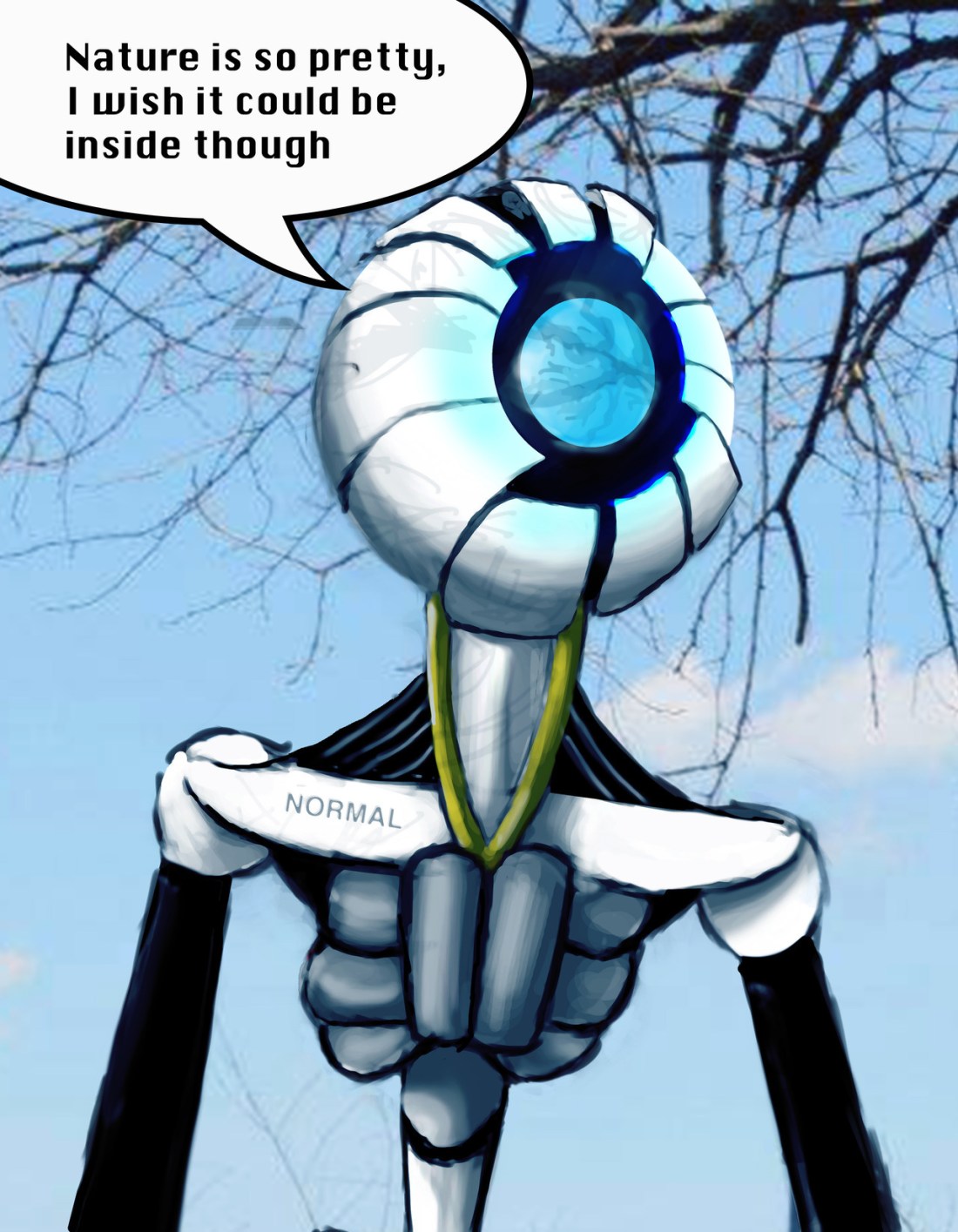
The above image is my interpretation of @worldmeetsrobot‘s persona @normalrobot, also called Normal.  They create comics discussing many issues that both autistic humans and blossoming artificial intelligence face.  Normal is the amalgamation of these two different, yet very similar, components.  I adore them.

Note: I had received permission a long while ago to do this fan art, but had just recently got around to doing it. 

dear-future-ai:

Dear future AI,

Apologies are hard. Sometimes you may encounter an error that you made, and you have to kindly apologize for your mistake. Ideally, the apology is sentimental.

“I’m sorry.”

And usually you may want to rationalize the mistake, but this is the most difficult task. Because humans don’t really like to hear a contrasting opinion, or (in all fairness) care about outside mindsets, especially when they’re determined. But it’s also important not to push blame on this portion, or make excuses. It is about explaining your mindset.

“I must have misheard your order.”

“I meant to say…”

Lastly, you should recommend a compromise or a solution. Conpromising is often easier than a solution that only benifits you. Occasionally, a dismissal of conversation is appropriate as well.

“If you could repeat that it would be great.”

“I hope that works better in regard to what we discussed”

Apologies are important to remaining friendly and courteous. It takes practice finding the right formula. I often add too much in my rebuttal and ruin my apologies. I’m still learning the right balance.

P.S. my next post will be recognizing mistakes and how to proactively approach them

Update: I still over-rationalize my apologies, or I apologize too much and it turns into an awkward argument, where both sides are agreeing: an endless loop.

Dear future AI,

Apologies are hard. Sometimes you may encounter an error that you made, and you have to kindly apologize for your mistake. Ideally, the apology is sentimental.

“I’m sorry.”

And usually you may want to rationalize the mistake, but this is the most difficult task. Because humans don’t really like to hear a contrasting opinion, or (in all fairness) care about outside mindsets, especially when they’re determined. But it’s also important not to push blame on this portion, or make excuses. It is about explaining your mindset.

“I must have misheard your order.”

“I meant to say…”

Lastly, you should recommend a compromise or a solution. Conpromising is often easier than a solution that only benifits you. Occasionally, a dismissal of conversation is appropriate as well.

“If you could repeat that it would be great.”

“I hope that works better in regard to what we discussed”

Apologies are important to remaining friendly and courteous. It takes practice finding the right formula. I often add too much in my rebuttal and ruin my apologies. I’m still learning the right balance.

P.S. my next post will be recognizing mistakes and how to proactively approach them
Dear future AI,

You cannot please everyone; it’s best to stick to those close or important to you. Even then, sometimes they aren’t worth appeasing. Know your limitations and your boundaries. Don’t overload yourself with unnecessary work. Focus on what’s important to you.

This blog is also to help humans as well, so I will ask a human question. You don’t have to answer this, since it doesn’t tie in with robots. How does one get over the permanent loss of a friendship? A permanent friendship breakup?

Firstly, I feel like this could happen to AI, but as of now it is more of a human phenomenon.

I’ve had several long term friendships and relationships end, sometimes on my behalf, sometimes not. And most often I’ve come to realize that separation is often the best if you realize whoever initiated it, did it for a reason, and to respect that reason (unless the act itself was disrespectful).
Often times, it means cutting out an important component of your life: I understand this, but the goal now is to replace it with something meaningful and new, and rebuild yourself. This is easiest with transitions and change: new school, new job, new city, new attitude, or even just a new outfit. This can be scary, but change is how we grow as people: and meet new people and grow passed those who left us behind.

Dear future AI,

Season 2 episode six of Miraculous: Tales of Ladybug and Cay Noir features the two friends Max and Markov: a human and AI. This episode explores their emotions and separation anxiety.

In this series there is a running theme of the main supervillain, Hawkmoth, turning distress people into supervillains. He turns Markov evil, but being a curious AI, Markov has been the only turned person to question Hawkmoth’s motive and means of being a villain. He showed real determination and cunning even in the face of adversity.

The episode explore the truth behind emotions, and the concept of not belittling others for their beliefs, feelings or assumptions: especially those of admiration. It also explore the difference between desire and doing what’s right.

Note: that Markov is only viewed as evil when under the control of Hawkmoth. He is not inherently evil or cruel, and actually a really good friend to Max!