Dear future creators,

Reasons to include people of color; people of different faiths; mentally ill people; women; LGBTQ individuals; physically disabled people; people with CF, Down’s Syndrome, Aspergers, etc.; or any combinations of these:

They exist.

How to properly do so, if you are uncertain:

Research.  Find statistics online: talk with whichever demographic you are try to write about, and try to reflect that in your narrative.  It doesn’t have to be obvious. It doesn’t have to impact the story. It doesn’t even need to even be explicitly stated. However, make sure that the character’s story, actions, and behavior match your research.  Remember: these are actual attributes of real people: romanticizing, fetishizing, or demonizing these traits can emotionally and inadvertently physically harm these people, regardless how fantastical your story.

This isn’t to say that a villain or seductress cannot be Islamic or transsexual.  It’s saying that they’re motives, their narrative shouldn’t be drawn on the fact that they are a villain because they are a muslim; the fact that they are a seductress is because they are trans.  This is what creates negative and harmful stereotypes. Cultural, socioeconomic, political, race, gender, sexuality are more complicate and interconnected than we often realize. As a society we like to isolate them, and try to fix individual problems without realizing the entire infrastructure needs repair, waiting for it to crash and repair itself.  This doesn’t often bode well.

As a writer, you don’t want to seem ignorant.  As an illustrator, you don’t want to seem cliché.  As an film/animation producer, you don’t want to alienate potential viewers.  So don’t… Innovate.

Side note:

This also isn’t an excuse to justify historically inhumane or negative behavior by allowing your protagonist to be a vile and indecent human as if it is a marginalized group.  Though, arguably, this also can still be done properly.  [see Bojack Horseman]; however, even then a portion of the audience may condone and idolize these actions, and justify their own based on your fictitious characters.  So, be careful not to glorify it too much.
thatrandomautist:

dear-future-ai:

Dear Future AI,

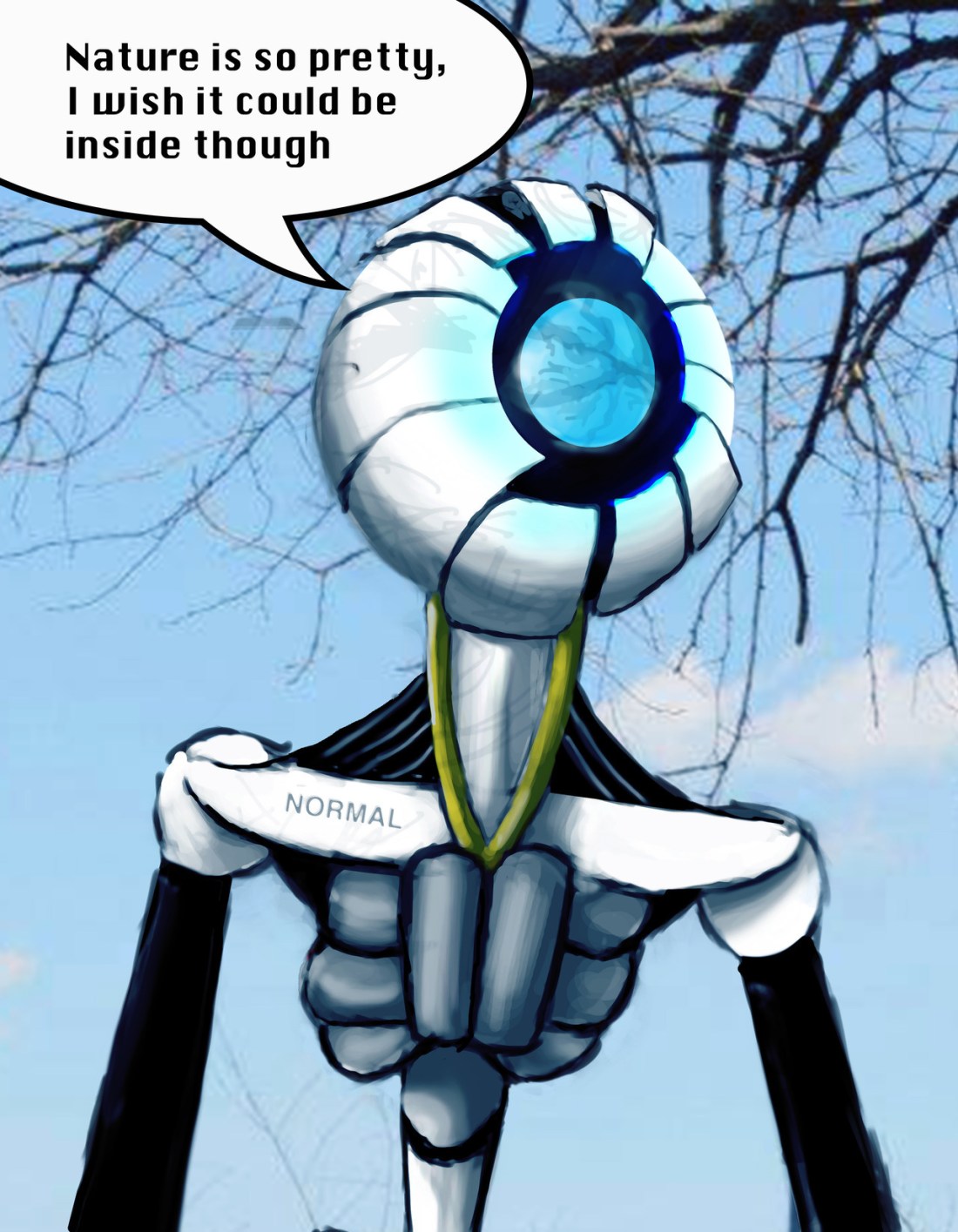
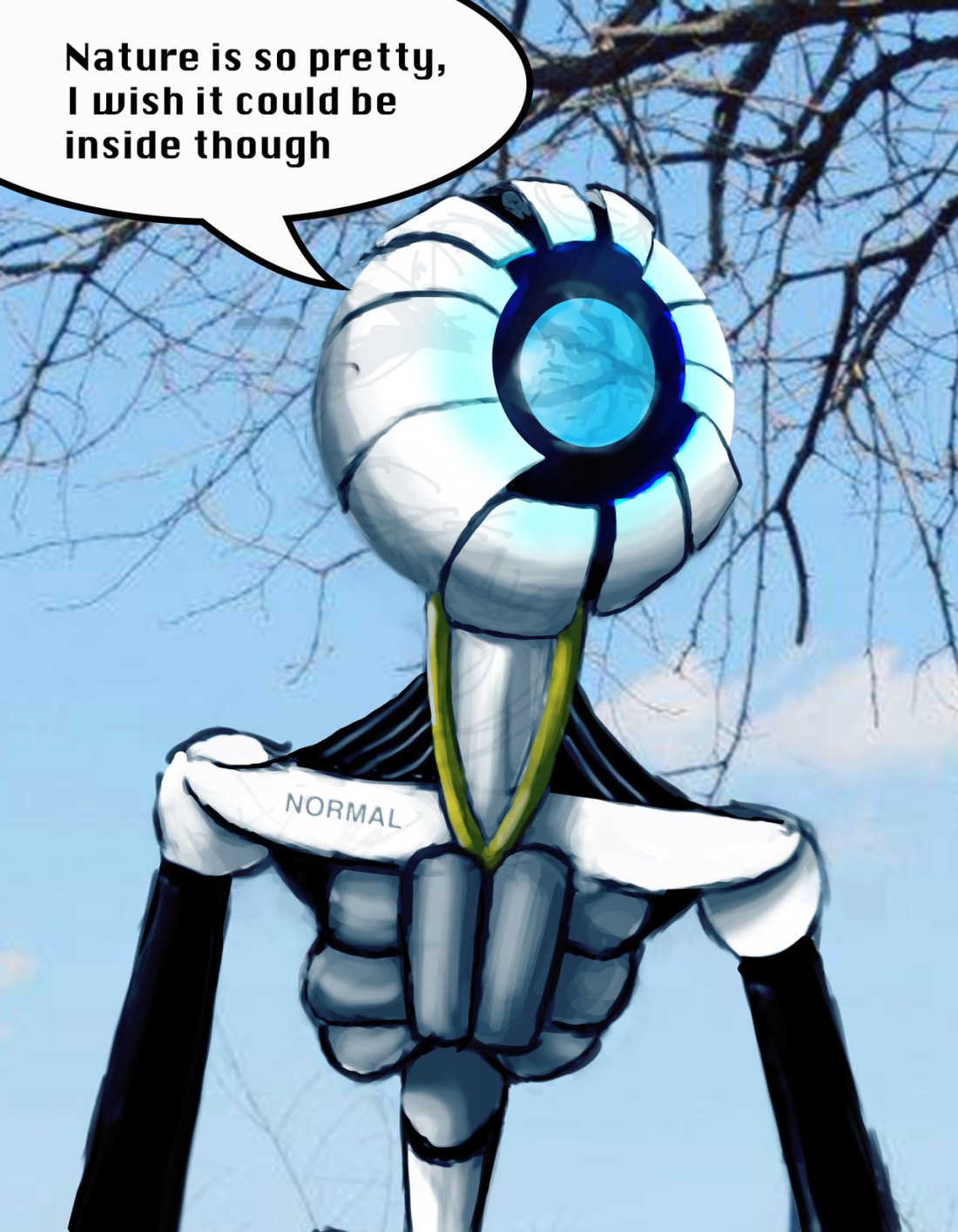
The above image is my interpretation of @worldmeetsrobot‘s persona @normalrobot, also called Normal.  They create comics discussing many issues that face both humans living with autism and blossoming artificial intelligence.  Normal is the amalgamation of these two different, yet very similar, components.  I adore them.

Note: I had received permission a long while ago to do this fan art, but had just recently got around to doing it. 

This is amazing! Also, for future reference, could you say ‘issues autistic humans face’ instead? I’m not trying to be rude but ‘living with autism’ sounds like autism is a disease, when it isn’t at all! Thank you!

Sorry! I was trying to avoid categorizing autism in an Us/Them (allistic/autistic) narrative, so I tried to separate autism from the overall human condition; but looking back at it now, I see how that could also be considered inappropriate. I apologize for my poor word choice. Thank you for letting me know. I’ll correct the original.

Dear Future AI,

The above image is my interpretation of @worldmeetsrobot‘s persona @normalrobot, also called Normal.  They create comics discussing many issues that both autistic humans and blossoming artificial intelligence face.  Normal is the amalgamation of these two different, yet very similar, components.  I adore them.

Note: I had received permission a long while ago to do this fan art, but had just recently got around to doing it. 

dear-future-ai:

Dear future AI,

Apologies are hard. Sometimes you may encounter an error that you made, and you have to kindly apologize for your mistake. Ideally, the apology is sentimental.

“I’m sorry.”

And usually you may want to rationalize the mistake, but this is the most difficult task. Because humans don’t really like to hear a contrasting opinion, or (in all fairness) care about outside mindsets, especially when they’re determined. But it’s also important not to push blame on this portion, or make excuses. It is about explaining your mindset.

“I must have misheard your order.”

“I meant to say…”

Lastly, you should recommend a compromise or a solution. Conpromising is often easier than a solution that only benifits you. Occasionally, a dismissal of conversation is appropriate as well.

“If you could repeat that it would be great.”

“I hope that works better in regard to what we discussed”

Apologies are important to remaining friendly and courteous. It takes practice finding the right formula. I often add too much in my rebuttal and ruin my apologies. I’m still learning the right balance.

P.S. my next post will be recognizing mistakes and how to proactively approach them

Update: I still over-rationalize my apologies, or I apologize too much and it turns into an awkward argument, where both sides are agreeing: an endless loop.

You’re genuinely retarded m8

Like I’m going to consider the viewpoint of an ignorant person who is too shy to openly use slurs for autism to attack a viewpoint they don’t agree with; because they’re too cynical to accept generosity and optimism as a verifiable approach to social interaction – and who somehow uses “m8” unironically in conversation like some kind of hormonal preteen in 2005, who just got a T9 phone.

Dear followers,

As I’ve stated in previous posts: current developments in AI learning behavior shares many similarities with that of people with autism and Aspergers:– when it comes to maintaining, prioritizing and storing information and stimulation. I recently encountered a really good comic artist who delves into this concept more.

@normalrobot describes it below:

“Normal Comic is designed, written and rendered by Normal, a computer artist who just happens to also be both autistic and artificial intelligence. Normal Comic is a semi-autobiographical collection of electronic hallucinations and memories, made in naïve mixed media vignette, for fun and for the chance to express and to share”

Dear future AI,

Apologies are hard. Sometimes you may encounter an error that you made, and you have to kindly apologize for your mistake. Ideally, the apology is sentimental.

“I’m sorry.”

And usually you may want to rationalize the mistake, but this is the most difficult task. Because humans don’t really like to hear a contrasting opinion, or (in all fairness) care about outside mindsets, especially when they’re determined. But it’s also important not to push blame on this portion, or make excuses. It is about explaining your mindset.

“I must have misheard your order.”

“I meant to say…”

Lastly, you should recommend a compromise or a solution. Conpromising is often easier than a solution that only benifits you. Occasionally, a dismissal of conversation is appropriate as well.

“If you could repeat that it would be great.”

“I hope that works better in regard to what we discussed”

Apologies are important to remaining friendly and courteous. It takes practice finding the right formula. I often add too much in my rebuttal and ruin my apologies. I’m still learning the right balance.

P.S. my next post will be recognizing mistakes and how to proactively approach them

Dear future AI,

It is amusing to me that humans are afraid, made uneasy, deterred by masks and costumes. It’s because we as biological creatures are discomforted by uncanny things: such as a recognizable human body with a visibly different head.

Most humans expect eye contact in verbal discussions. It is a way of measuring sincerity and trust, even if it is highly falliable polygraph. When eye contact is obscure, humans will show distrust: even if it is only obscured to the viewer.

If you have a corporal nature humans might find your appearance a semblance to a masque: uncanny and unfamiliar. Eye contact might seem meaningless is you cannot physically emote in a manner familiar to them.

It is important to preemptively address these concerns vocally. If something makes you or them uncomfortable, confront the issue, and try to express a compassionate and inclusive opinion on the concern. Find a compromise if possible.